
When it comes to AI adoption, one question always follows close behind: how do you measure the return?
For most small and mid-sized businesses, the first instinct is to look at call volume or average response time. But those metrics only tell part of the story. The real value of an AI receptionist lies in what happens after the call - the time saved, the opportunities captured, and the customers retained.
As IBM notes in its recent analysis on maximizing ROI on AI in 2025, measuring artificial intelligence success means tracking both the tangible and the human results. The same holds true for AI-powered customer conversations.
Why Traditional KPIs Fall Short
Metrics like “calls answered” or “average handle time” were built for call centres, not for intelligent automation. They measure output, not impact.
AI changes the conversation. Instead of simply counting how many calls were answered, businesses can now measure what each interaction achieved - from confirmed appointments to captured leads and improved response speed.
For example, a service business using an AI receptionist might handle 300 calls in a week, but the real KPI is that 70 of those turned into qualified leads worth $9,000 in projected revenue. The traditional metric would show “300 calls handled.” The AI metric shows “$9,000 in value.”
The Metrics That Matter in the AI Era
Here are the new KPIs defining AI-driven customer communication:
- Answered-Call Rate: How many calls are handled automatically by AI.
- Time Saved per Call: Average minutes saved compared to a manual process.
- Lead Conversion Rate: Percentage of calls that result in bookings or sales.
- Revenue per Conversation: The dollar value generated from each interaction.
- Customer Satisfaction Index: Derived from reviews, survey results, or repeat engagement.
Each metric reflects something measurable and actionable. Combined, they paint a picture of how AI contributes to both productivity and profitability.
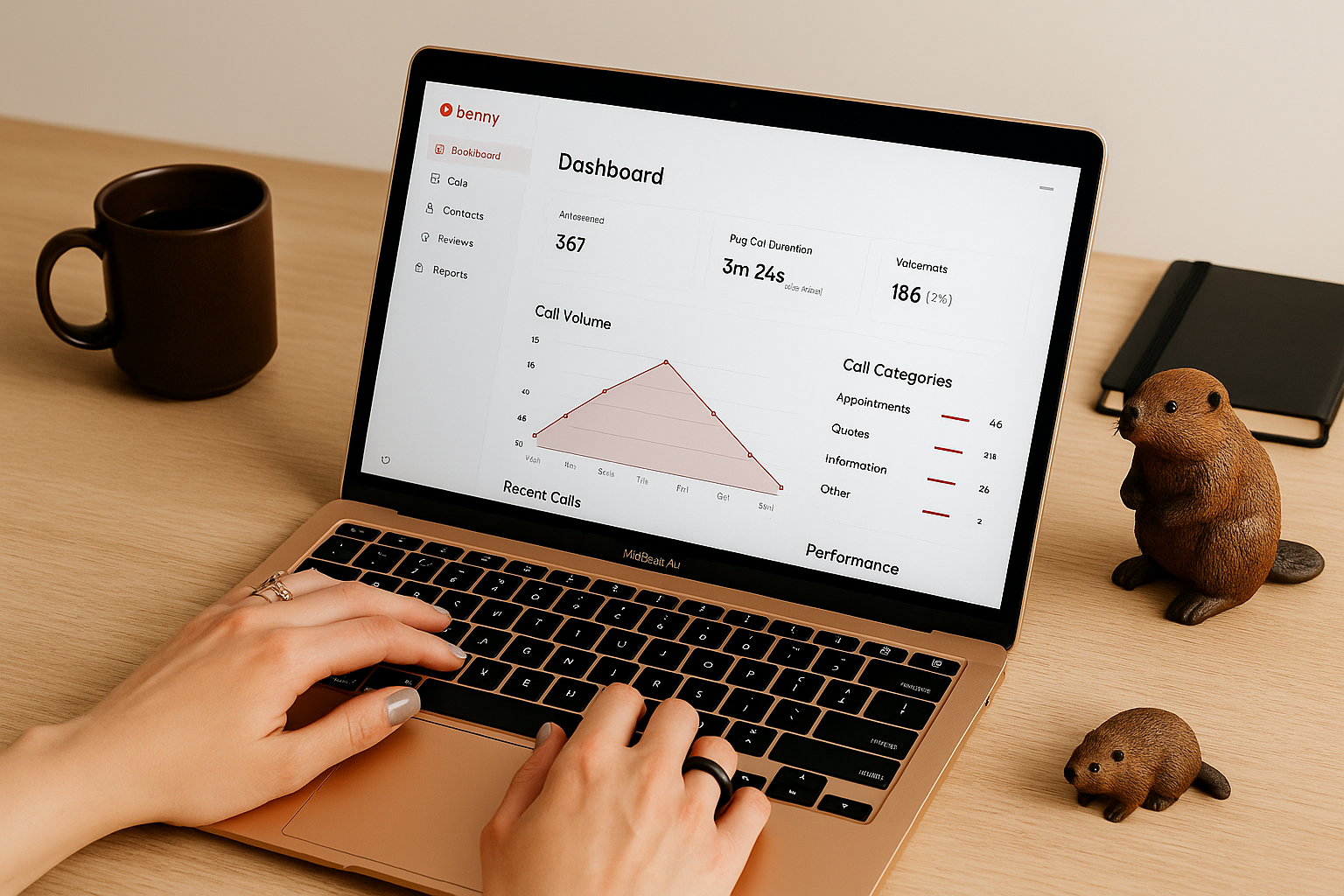
To see how these insights come to life, explore the Reports section within your Benny dashboard.
Turning Data Into Decisions
AI doesn’t just collect data; it translates it into operational intelligence.
When Ask Benny captures a new lead, logs a call, or books an appointment, every data point becomes part of a bigger performance picture. Businesses can identify patterns such as peak calling times, response lag, and conversion bottlenecks, all from a single reporting view.
For instance, if Benny handles 200 calls and 40 convert into sales worth $6,000, that equals $30 per conversation in direct value. When those insights are paired with CRM or marketing analytics, leaders gain a true picture of what AI contributes to revenue growth.
Time Saved Is Money Earned
The financial impact of time savings is one of the easiest ROI indicators to calculate.
Consider that the average missed call costs a small business between $100 and $200 in potential revenue. If AI captures even half of those, the value compounds quickly. Over a month, that can offset the entire cost of an AI receptionist subscription and then some.
The same logic applies to internal efficiency. Staff who once spent hours returning missed calls can now focus on high-value tasks - quoting jobs, closing deals, or delivering service. The cost savings show up not just in dollars but in reclaimed capacity.
The Intangible Returns
Not every return on investment can be quantified immediately, but the intangibles often deliver the biggest long-term payoff:
- Consistency: Every caller receives a prompt, accurate response.
- Reliability: After-hours calls are no longer a vulnerability.
- Team Morale: Employees can focus on skilled work rather than repetitive triage.
- Customer Trust: Fast, reliable responses create a stronger first impression.
These elements drive loyalty and brand reputation, which ultimately translate into measurable growth over time.
Building Your Own AI ROI Dashboard
The most successful businesses track AI performance as part of their broader operations dashboard. Ask Benny’s reporting connects easily to your CRM, analytics tools, and marketing platforms - giving you end-to-end visibility into how each conversation contributes to growth.
This unified view makes it easier to forecast demand, allocate resources, and identify where automation adds the most value. Over time, the data tells a clear story: where your calls come from, how they convert, and what your AI investment returns.
AI receptionists aren’t just about answering calls. They’re about capturing measurable value from every interaction.
The businesses that adopt AI, and measure it correctly, will understand not only how many calls they received, but how those calls turned into revenue, retention, and real customer relationships.
Start tracking what really matters. Try Benny for free and see how AI insights turn every call into measurable ROI.

About Benjamin Beaverton
Benjamin Beaverton is Ask Benny’s resident expert in all things AI, call handling, and small business success. A proudly Canadian beaver with a knack for staying busy, Benjamin shares insights from the virtual front desk - where no call goes unanswered and no customer is left waiting. When he’s not helping businesses boost their customer service, you’ll find him fine-tuning Benny’s scripts, building better workflows, and occasionally gnawing on tech trends.
Follow Benjamin for smart tips, fresh updates, and a peek behind the bark at Ask Benny HQ.